


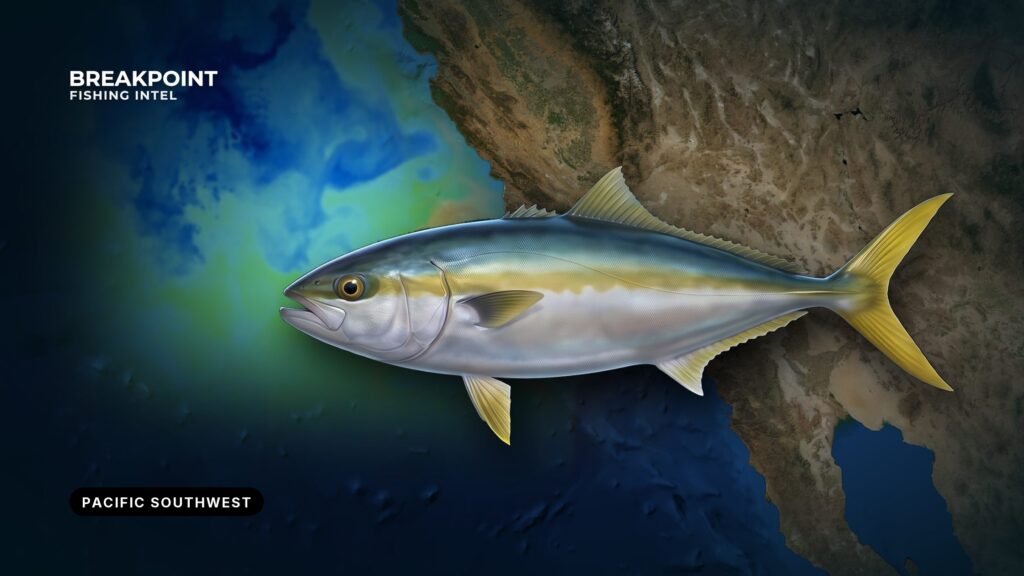
California yellowtail fishing in the Pacific Southwest depends on three things: warm water, bait and something for fish to hide behind. Fish push north into the Southern California Bight as the water warms, and they stack where bait meets structure: kelp beds, kelp paddies, banks and ridges.
This guide is organized by place, water and structure. It covers where the fish show up from the Coronado Islands to Point Conception, what holds them, how anglers fish for them, and which rules apply where you fish.
California yellowtail at a glance
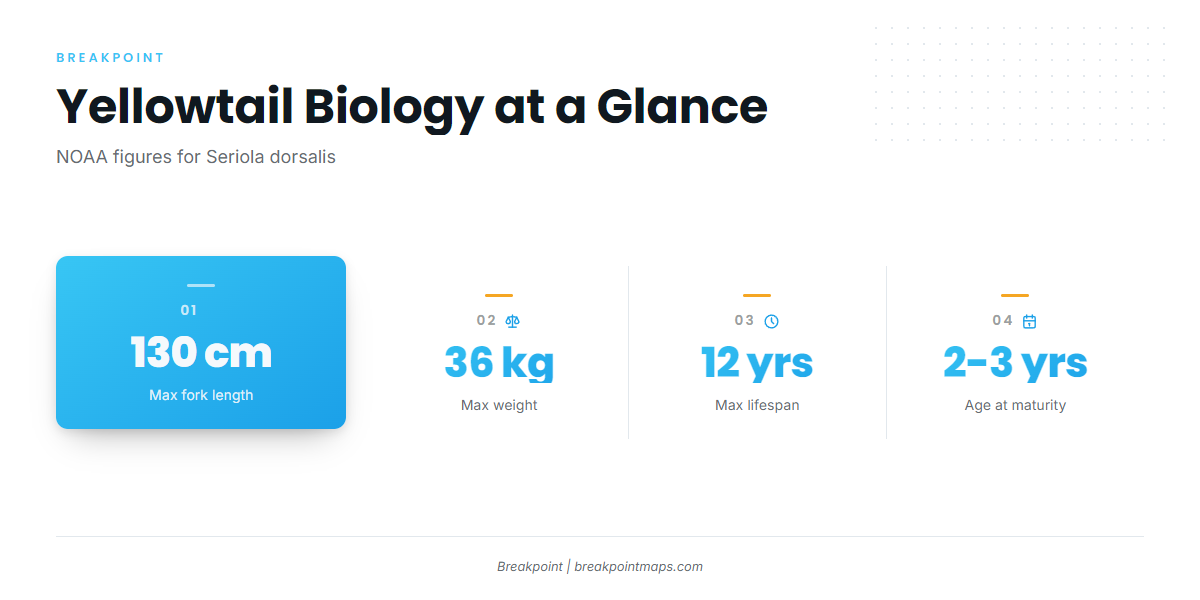
California yellowtail (Seriola dorsalis) is a schooling jack. According to NOAA Fisheries yellowtail research, it moves north into Southern California as the water warms in spring and summer and retreats south along Baja California in fall and winter. The species was formerly treated as Seriola lalandi. NOAA lists a maximum length of up to 130 cm fork length and a maximum lifespan of 12 years. Identification and full biology are in the California yellowtail species guide.
Where and when yellowtail show up in Southern California
Fish move into the Bight as water warms in spring and hold through summer, then slide south in late summer and fall. Larger fish settle as inshore residents around anchored kelp, while smaller schoolfish roam offshore under floating kelp. The Pacific Southwest fishing guide covers the wider region from Point Conception south to the Coronados.
Warm-water years can keep fish inshore longer and carry them farther up the coast, but a push far north remains the exception.
| Area | Structure that holds fish | Pattern |
|---|---|---|
| Coronado Islands | Island kelp, rock and high spots | Core San Diego ground, productive late spring through fall |
| Nine-Mile Bank | Bank and high spots | Nearby offshore option out of San Diego |
| La Jolla and North County | Kelp beds, depth transitions | Fish feed with moving current |
| Horseshoe Kelp, Palos Verdes | Mainland kelp edges | Summer mainland grounds |
| Catalina and San Clemente | Ridges, island kelp, high spots | Summer fish, longer runs in warm years |
| Santa Cruz Island | Island kelp | Northern edge of the usual range |
San Diego and the Coronado Islands
The Coronado Islands are the core San Diego yellowtail ground. They produce from late spring through fall, and fish can be found there through much of the year. Nine-Mile Bank adds nearby high spots to work. The islands lie in Mexican waters, so see the Regulations section.
La Jolla and North County kelp
Fish hold along the La Jolla kelp beds and depth transitions. They feed when the current moves and often show on top around the turn of the tide. The same pattern applies up the coast from Oceanside to Dana Point.
Kayak anglers slow-troll live bait close behind the kayak, keep the PFD on and carry a radio attached to it. Marine protected areas restrict take in parts of this coast, so check the Regulations section.
Orange County and Palos Verdes
Horseshoe Kelp and the Palos Verdes Peninsula kelp edges are the mainland grounds in this stretch. Fish hold on the kelp and on the depth changes just outside it.
Catalina and San Clemente
Fish cruise the ridge along Catalina’s front side, and island kelp holds fish through summer. San Clemente Island adds kelp and high spots. Warm water and pelagic red crab years tend to keep island fishing going longer, and red crab shows up in yellowtail stomachs in NOAA-published sampling.
The Channel Islands and Point Conception
Santa Cruz Island kelp holds fish. A NOAA-published Fishery Bulletin age and movement study places the usual northern edge around the Channel Islands. Fish are rarely found north of Point Conception except in highly anomalous warm years.
The water and structure that hold California yellowtail
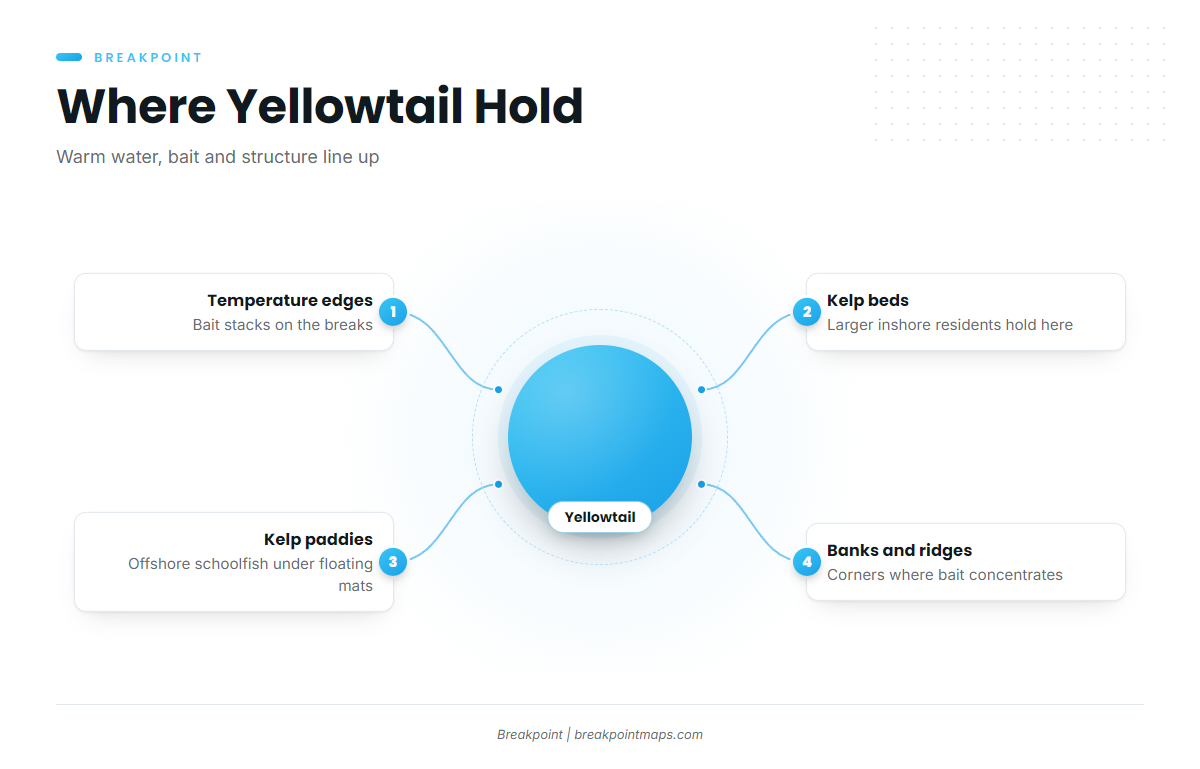
Yellowtail hold where warm water, bait and structure line up: temperature edges, anchored kelp, drifting paddies and the corners of banks and ridges. They use structure to ambush bait, and a hooked fish heads straight for it. That is why the places that hold fish also cost you tackle.
Temperature edges and bait
Fish travel along temperature breaks, and bait stacks on the edges. When a cold spring keeps the water down, fish can turn picky, and live squid often outfishes fin bait. Warmer water brings sardine, anchovy and mackerel bites.
Kelp beds
Anchored kelp holds the larger inshore residents. Work the up-current edges.
Kelp paddies
Floating kelp mats hold offshore schoolfish. Mark bait on the sounder under or near the paddy; larger marks below the bait are the fish.
Banks, ridges and high spots
Fish gather on corners where a ridge or bank turns, with bait concentrating on the up-current side. Nine-Mile Bank and the Catalina front-side ridge are examples.
Three Breakpoint layers help you decide where to look:
- OBS SST shows temperature edges.
- Chlorophyll shows color breaks where paddies and bait collect.
- Chart Contours show the turns on banks and ridges.
Cloud can block a satellite SST pass, so a gap on the map is missing data and says nothing about cold water. Chart layers are not for navigation. They help you decide where to look but do not promise fish.
How anglers fish for yellowtail in Southern California
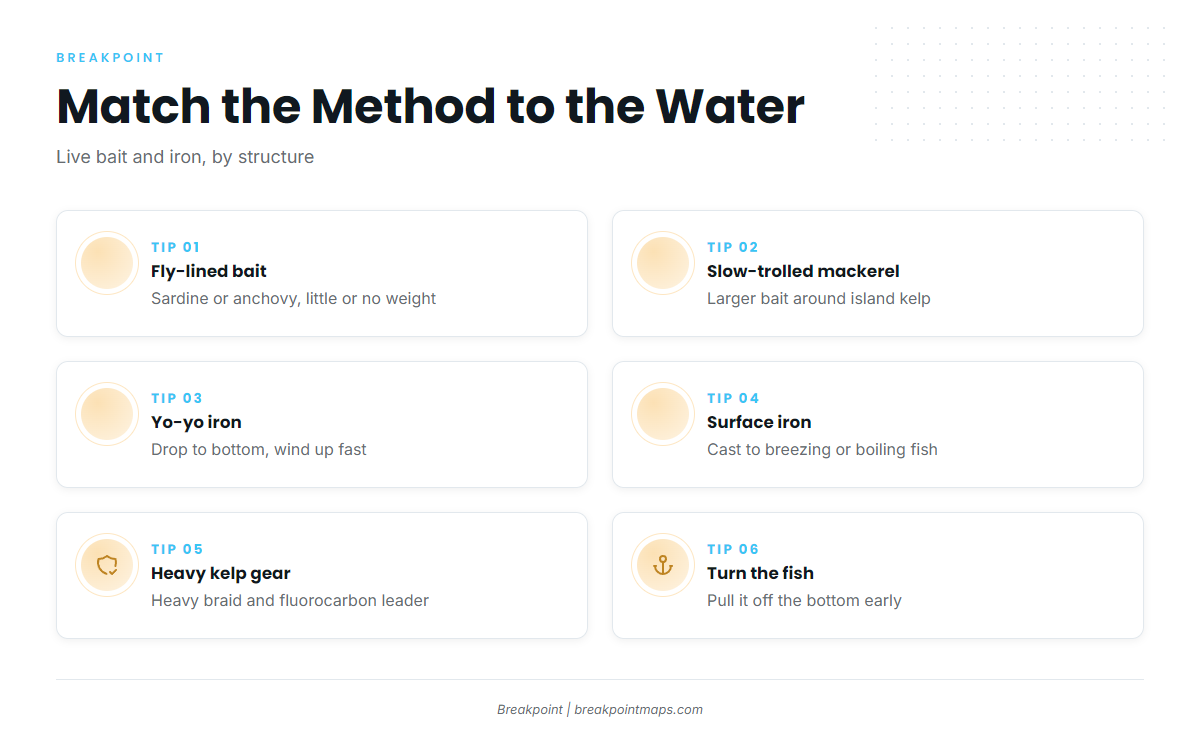
Live bait works the kelp and paddies, and iron works the banks and breezing schools. Heavy tackle matters wherever fish can reach rock or kelp.
| Method | Best water | Core idea |
|---|---|---|
| Fly-lined live bait | Kelp, paddies, chum lines | Little or no weight, healthy bait |
| Slow-trolled mackerel | Island kelp | Larger bait for bigger fish |
| Yo-yo iron | Banks, high spots | Drop to depth, wind up fast |
| Surface iron | Breezing or boiling fish | Cast to fish on top |
Fly-lined live bait
Fly-lining sardine or anchovy with little or no weight is the most common method. Pick a healthy bait. Hooking it through the nose sideways is the default and is easiest on the bait, while collar or belly hooking changes how it swims. Crews chum fish to the boat.
Slow-trolled mackerel
Slow-trolling a larger mackerel around island kelp targets bigger fish. Kayak anglers use the same idea close behind the boat.
Yo-yo iron
Drop a heavy jig to the bottom and wind it straight up fast. Find the depth where fish are biting, then count each drop so the jig reaches that depth again.
Surface iron
Cast a lighter jig to fish breezing on the surface or boiling in the chum line.
Tackle for kelp and rock
Lighter gear can handle school fish in open water. Around kelp and rock, use heavy braid and a fluorocarbon leader.
Fighting the fish
Turn the fish off the bottom early, before it reaches rock or kelp. On a crowded rail, follow your fish over or under other lines. Yellowtail share water with white seabass, bonito, barracuda and offshore tuna, which are covered in the other coastal and offshore gamefish guides.
Check the water on the map before choosing between the islands, the banks or the kelp.
Guides to California yellowtail fishing from specific ports: Avalon, Bodega Bay, Channel Islands Harbor, Dana Point, Marina del Rey, Mission Bay, Morro Bay and Newport Beach.
FAQ
Where are the best places to catch yellowtail in Southern California?
The Coronado Islands and Nine-Mile Bank are the core San Diego grounds, built on island kelp and high spots. La Jolla kelp, Horseshoe Kelp and the Palos Verdes edges hold mainland fish. Catalina and San Clemente offer ridges and island kelp, and fish also use kelp paddies offshore.
When is yellowtail season in Southern California?
The season is open year-round under CDFW rules. Fish arrive as water warms in spring, hold through summer and slide south in fall. Some resident fish stay inshore through the cooler months.
Are yellowtail moving north of Point Conception?
Fish are usually found as far north as the Channel Islands. NOAA-published science says they are rarely found north of Point Conception except in highly anomalous warm years.
What is the yellowtail limit in California?
The limit is 10 per person per day, with a 24 in fork length minimum. Up to 5 fish under 24 in may be kept within the 10. Check CDFW before fishing.
Do I need a California license on a party boat?
Anglers 16 and older need a sport fishing license. South of Point Arguello you also need the Ocean Enhancement Validation unless you hold a 1- or 2-day license. The Coronado Islands fall under Mexico’s rules.
How many limits can I keep on a multi-day trip?
You can keep up to 3 daily limits when the vessel has filed a Declaration for Multi-Day Fishing Trip with CDFW. Only 1 limit may be taken per calendar day.
Is California yellowtail the same as yellowtail amberjack or Seriola lalandi?
California yellowtail is Seriola dorsalis. It was formerly treated as Seriola lalandi, a name some sources still use for it.