




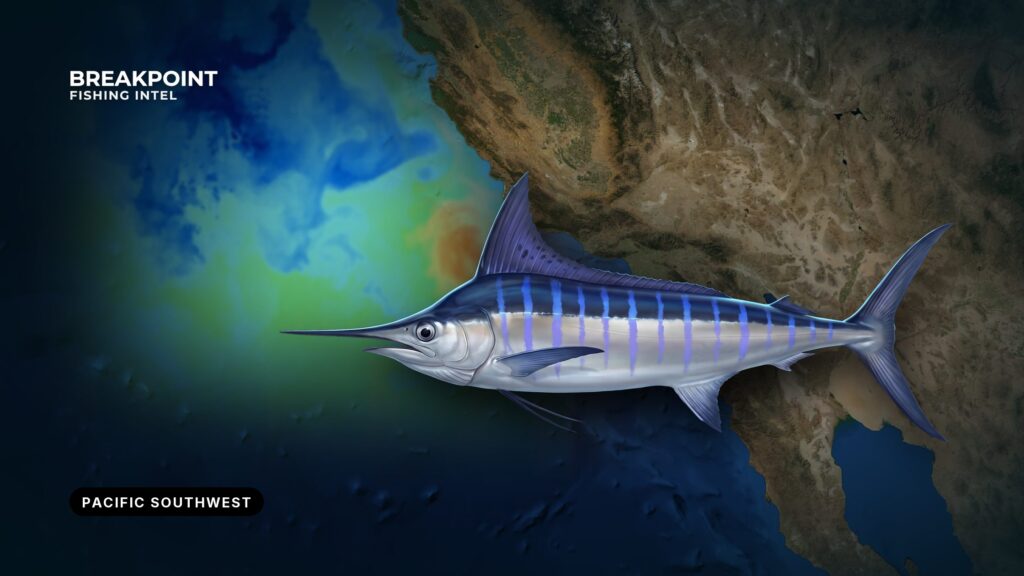
Striped marlin show up off Southern California in late summer and early fall, mostly around Catalina, San Clemente Island and the offshore banks. Nearly every fish is released.
The fishery centers on the Southern California Bight. Marlin location follows temperature, edges, banks and bait, so the useful question is where to look, since fish aren’t guaranteed anywhere. The bite overlaps with the rest of the Pacific Southwest offshore season. This guide covers where and when the fish are found, the water and structure that hold them, how anglers fish and release them, and the federal and state rules.
Striped Marlin at a Glance
Identification and biology are covered in our striped marlin species guide. The short version:
- Striped marlin (Kajikia audax) belong to the family Istiophoridae.
- They are highly migratory and epipelagic, spending most of their time in the surface layer above the thermocline, according to NOAA.
- Their diet includes mackerel, sardine, anchovy and squid.
- NOAA gives a preferred temperature range of 20 to 25°C.
These fish arrive from the west. State fisheries research notes that striped marlin come in from the west, unlike other Southern California gamefish that move up the coast. Two North Pacific stocks are assessed, with some mixing, according to the CDFW Marine Species Portal.
Where and When
The Southern California striped marlin season runs from late summer into early fall, commonly July through October, as regional sight-fishing reports describe it. Warm-water years can start the run earlier and extend it later.
The Banks and Areas
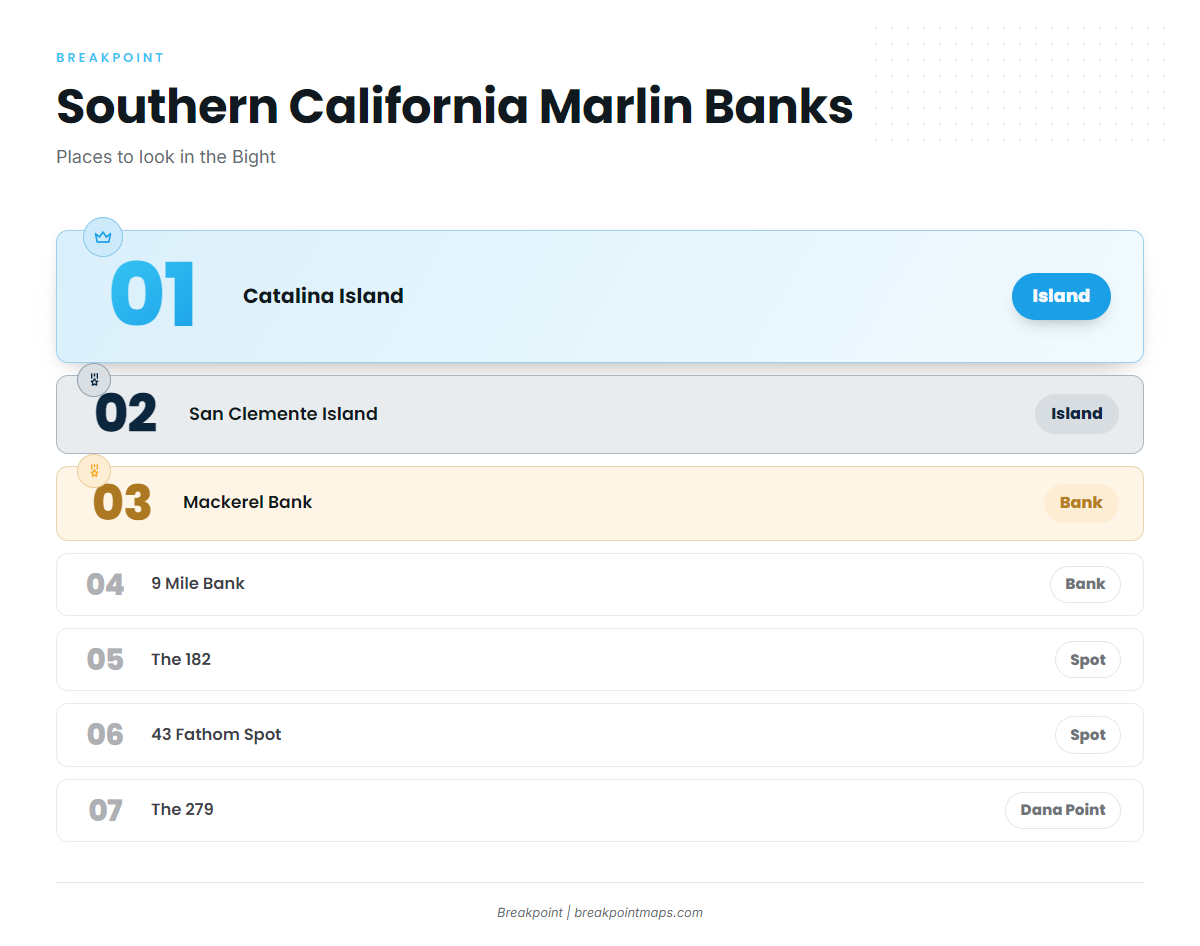
Fish often arrive first around Catalina or the offshore banks southeast of the island. The names you hear most:
- Catalina Island
- San Clemente Island and Mackerel Bank
- 9 Mile Bank
- The 182
- 43 Fathom Spot
- The 279, off Dana Point
Tanner Bank and Cortes Bank are other offshore banks of the Bight.
Why Some Seasons Are Strong
Strong and weak seasons follow warm-water years. Abundance runs greater during strong El Niño periods, and how long fish stay in an area depends on water quality and forage. One season’s warm water does not predict the next, so plan each trip around what the water is doing now rather than last year’s run.
Water and Structure
Temperature tells you where marlin can be. Breaks and structure tell you where they feed.
Temperature Sets the Range
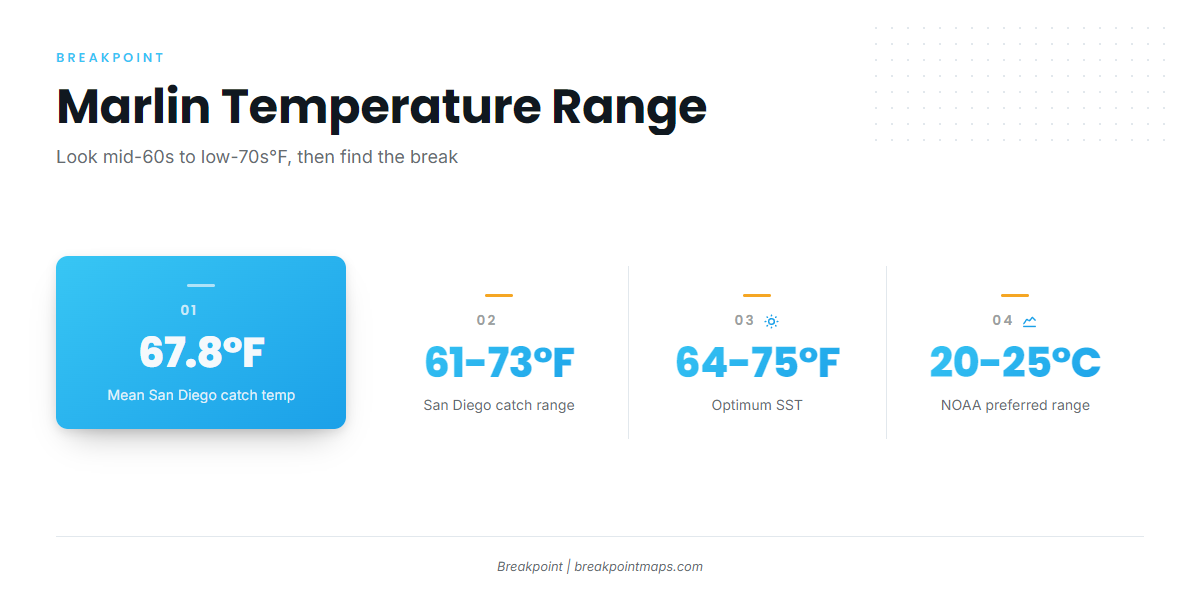
| Reference | Value |
|---|---|
| San Diego catch temperatures (NMFS San Diego catch data) | 61°F to 73.0°F, mean 67.8°F |
| Optimum SST (Squire, citing Uda) | 64.4°F to 75.1°F |
| NOAA preferred range | 20 to 25°C |
Look for water in the mid-60s to low-70s°F, and look harder where it changes.
Why a Break Beats a Single Reading
One temperature reading tells you the water is livable. A break is where 2 bodies of water meet. Bait gathers and stalls there, so predators patrol it. A color edge works the same way: where green water meets blue, the food chain sets up. A current edge does the same job, and you can often read it on a chart before you can see it from the helm.
Reading a Chlorophyll Edge
Higher chlorophyll means greener, plankton-rich water. The edge between green and clean blue water often holds bait, and marlin tend to work the blue side of that edge. Treat that as a tendency rather than a rule.
Cloud or haze can block satellite passes, leaving a chart without the most recent water. Read the date on the image before you trust it.
Banks, Upwelling and Bait
Current pushing against the rising slope of a bank drives cooler, nutrient-rich water upward. That feeds plankton and bait, and the bait draws marlin. This is why the banks above hold fish when the open water between them does not.
Marlin are seen most often near islands, seamounts and boundary currents, and they come close to shore only where deep drop-offs occur. In the Bight, that points you to the banks and the island edges.
Before you leave the dock, open OBS SST and Chlorophyll to find temperature and color breaks over the banks. Add Chart Contours to see where the bank edges rise beneath them. Chart layers are not for navigation.
How Anglers Fish Them
Anglers troll to search, bait-and-switch when a fish rises to the spread, and sight-cast when they see one.
Signs on the Water
- Tailers, fish finning at the surface
- Sleepers, fish resting at the surface
- Terns working bait
- Jaegers, which Sportfishing calls an almost-certain marlin indicator when one is dipping
- Bait pushed to the surface
- Kelp paddies
- Color edges
Trolling to Search
Striped marlin readily attack teasers and daisy chains. Anglers troll lures along the breaks to cover water until a fish shows itself.
The Bait-and-Switch
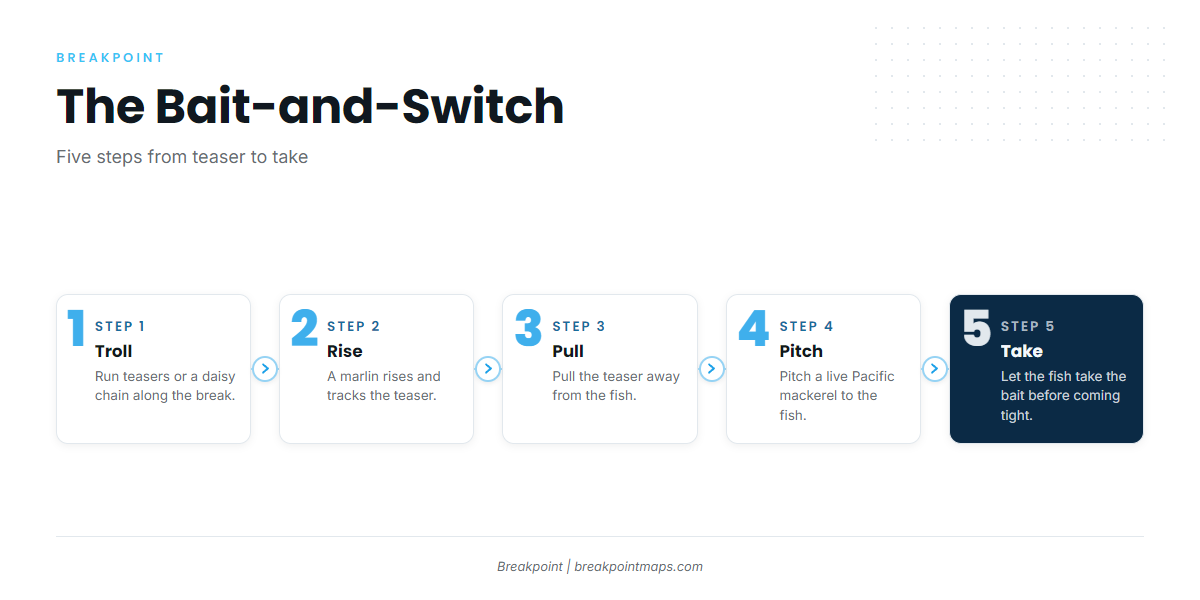
This is a widely used method for fish that rise to the spread:
- Troll teasers or a daisy chain.
- A marlin rises and tracks the teaser.
- Pull the teaser away from the fish.
- Pitch a live bait, such as a Pacific mackerel, to the fish.
- Let the fish take the bait before coming tight.
Sight-Casting Tailers and Sleepers
A surfaced fish gives you a clear target for a cast live mackerel or sardine. Circle hooks are a release best practice here, though not a requirement.
Swordfish and dorado use the same warm water, so a marlin trip often shares its plan with them. Our other billfish guides cover those fish.
Check the breaks in the app before you choose a bank.
Handling and Release
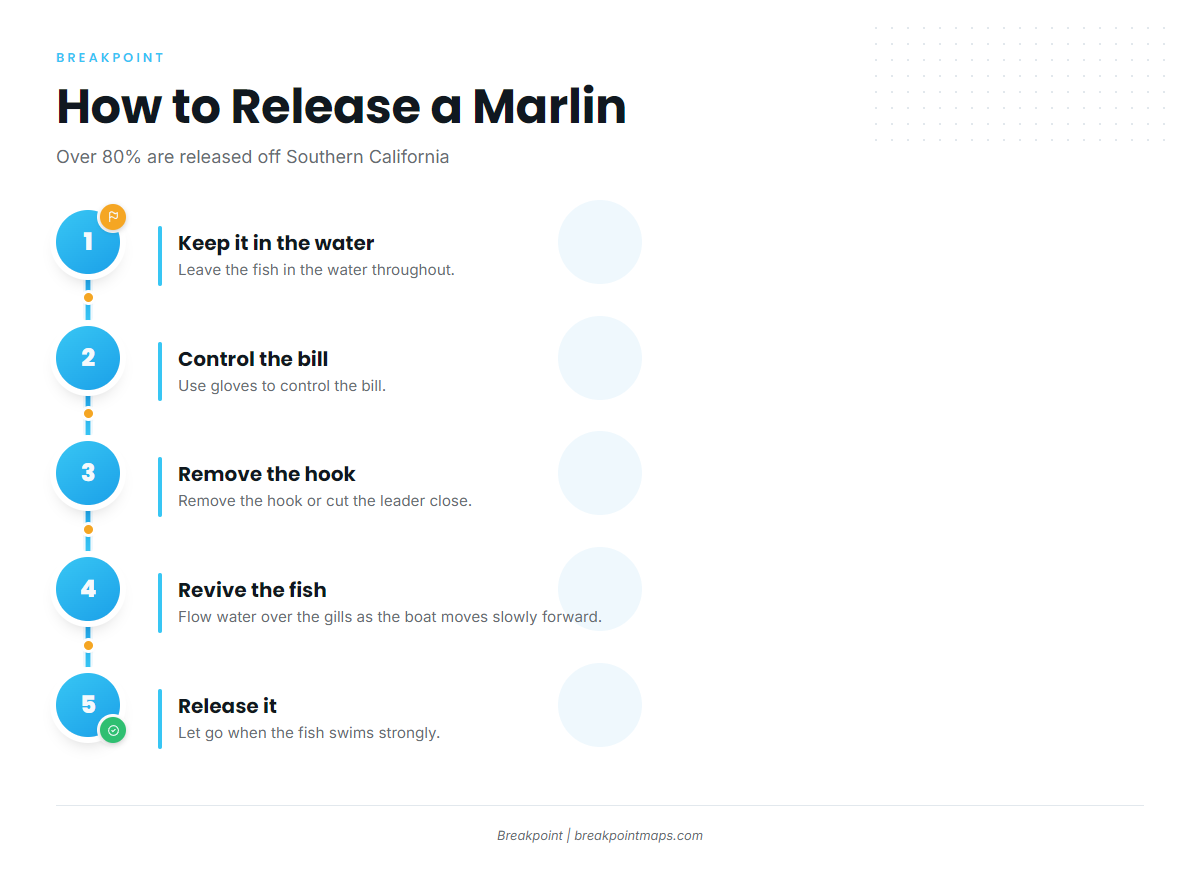
More than 80 percent of striped marlin caught off Southern California are released, according to the CDFG document on the fishery. NOAA notes that most fish caught in recreational tournaments are tagged and released.
General release steps:
- Keep the fish in the water.
- Control the bill with gloves.
- Remove the hook or cut the leader close.
- Revive the fish with water flowing over the gills while the boat moves slowly forward.
- Release it when it swims strongly.
Check NOAA Fisheries and CDFW for current gear rules before you fish.
Guides to striped marlin fishing from specific ports: Avalon, Dana Point, Newport Beach, San Diego, San Pedro and Long Beach, Santa Barbara and Two Harbors.
FAQ: Striped Marlin Fishing in the Pacific Southwest
What are the best months for striped marlin in Southern California?
Late summer into early fall, commonly July through October. Warm-water years can stretch the run on either end. Fish often show first around Catalina and the offshore banks southeast of the island.
Can you keep a striped marlin in California?
Yes. California allows 1 marlin per person, with no minimum size. Most anglers release their fish, though: more than 80 percent of striped marlin caught off Southern California are released.
What water temperature should I look for?
San Diego catches occur at 61°F to 73.0°F, with a mean of 67.8°F. An edge matters more than a single reading. Find where temperature or color changes over a bank and start there.
Do private boats need a federal HMS permit?
The federal permit rule names commercial and charter vessels. Private recreational boats are not named in it. Check NOAA Fisheries before you fish, since permit rules can change.
Which license and validation do I need?
A California sport fishing license at age 16 and over, plus an Ocean Enhancement Validation south of Point Arguello. The validation is not required on 1-day or 2-day licenses. See CDFW for current fees.
Can you sell a striped marlin?
No. California prohibits the sale of recreationally caught striped marlin, and vessels holding a federal HMS permit may not sell striped marlin either.
Why are some seasons better than others?
Seasons follow El Niño and warm-water years. Fish stay where water quality and forage hold them. One warm year does not predict the next, so read the water before each trip.