



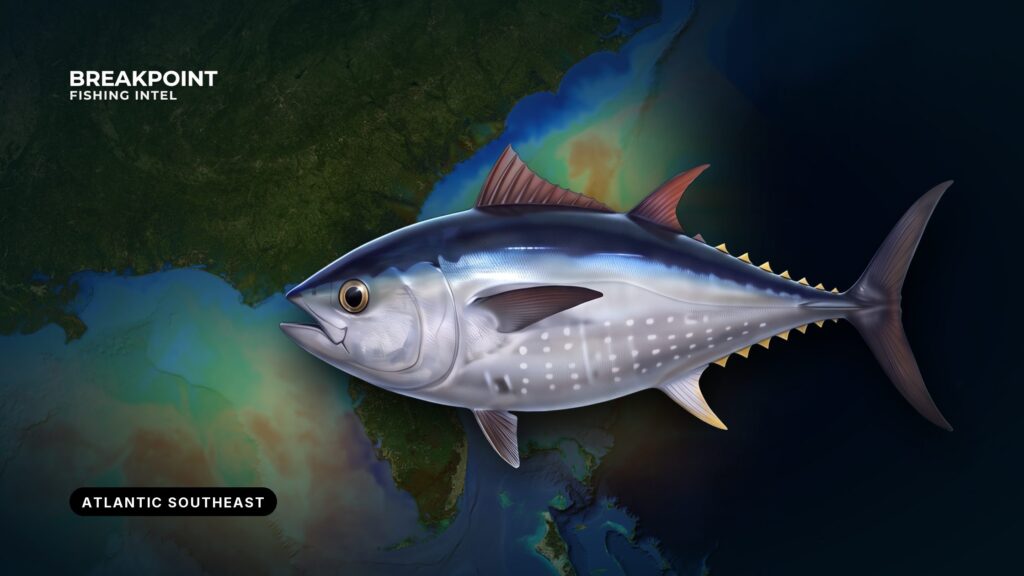
Atlantic bluefin tuna fishing in the Atlantic Southeast centers on North Carolina in winter, with fish working the shelf off Oregon Inlet, Hatteras, Morehead City and Cape Lookout and passing along the coasts of South Carolina, Georgia and Florida’s east coast. Tagged fish released off Morehead City aggregate from as early as mid-October to as late as mid-May.
This page covers where the fish hold and why: water temperature, the Gulf Stream edge, shelf structure and bait. It also explains how federal and state rules divide. It can’t promise fish, but it should help you decide where to look. For the wider region, see our Atlantic Southeast fishing guide.
The fish
Atlantic bluefin are the largest tuna in the Atlantic, growing up to 13 feet and 2,000 pounds, according to NOAA. They school by size, and adults feed mainly on herring, bluefish and mackerel.
They are highly migratory and sometimes school with yellowfin, bigeye, albacore and skipjack, so identify a fish before you keep it. For full identification and biology, see the Atlantic bluefin tuna species guide.
Where and when
North Carolina is the center of the Southeast winter bluefin fishery. In the Morehead City tagging study, fish released offshore of Morehead City aggregated from as early as mid-October to as late as mid-May. They spent 71% of peak time in 68 to 73°F (20 to 23°C) water.
Oregon Inlet, Hatteras and Morehead City are the main departure ports. The Outer Banks run goes around Cape Hatteras and Diamond Shoals, and boats work the winter bluefin bite from there.
South of Cape Lookout the pattern changes. NC fisheries managers note that from Cape Lookout south, fish are often inshore of the Gulf Stream and can be caught within sight of the beach, especially near Cape Lookout.
Large fish leave day-trip range in late spring, moving north, and return in meaningful numbers in late fall. See bluefin in the Atlantic Northeast for that part of the migration.
Spawning ties the Southeast to the rest of the range. NOAA describes spawning off the Carolinas, shoreward of the Florida Current, on the Blake Plateau and north of the Bahamas. The main spawning run is mid-April to June, mainly in the Gulf, and fish moving to and from those grounds pass Georgia and Florida’s east coast.
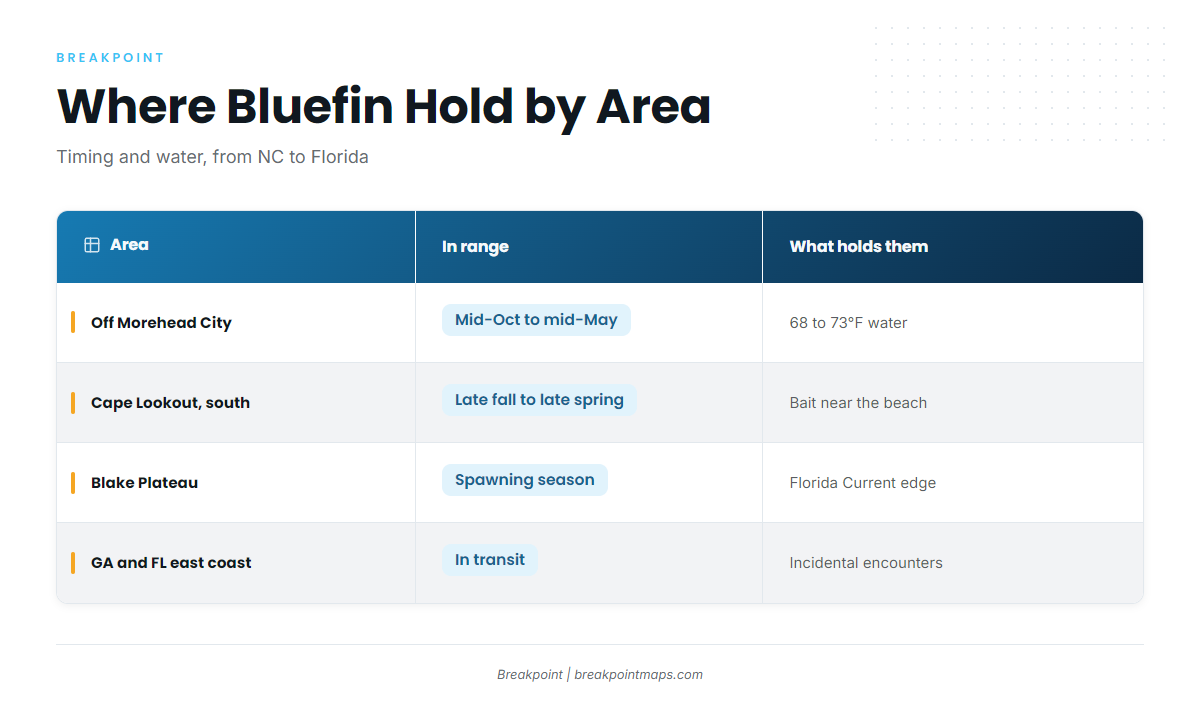
| Area | When fish are in range | What holds them |
|---|---|---|
| Off Morehead City (tag study) | Mid-October to mid-May | Water of 68 to 73°F (20 to 23°C) |
| Cape Lookout and south | Late fall to late spring (NC DMF) | Inshore of the Gulf Stream, bait close to the beach |
| Off the Carolinas, Blake Plateau | Spawning season (NOAA) | Shoreward edge of the Florida Current |
| Georgia and Florida east coast | Fish in transit | Florida Current edge; incidental encounters |
Water and structure
Look for 68 to 73°F water with bait in it, near an edge. The warm Gulf Stream edge and temperature breaks concentrate bait, and bait concentrates bluefin. Off the Outer Banks, that bait is menhaden and bluefish; herring is also on NOAA’s diet list.
Depth matters as much as the surface. Tagged bluefin spent most of their time between the surface and 50 meters (about 165 feet), and their mean dive depth tracks thermocline depth, so a surface chart won’t tell you where fish are feeding in the water column.
The shelf break and the Cape Lookout shoals shape where temperature breaks and bait set up. Use them to narrow your search; fish don’t necessarily sit on any one spot.
Know what the data cannot see:
- Clouds block satellite passes and leave gaps in the picture.
- SST reads the skin of the water, not the thermocline.
- Chlorophyll shows the color edge where bait may sit, not the fish.
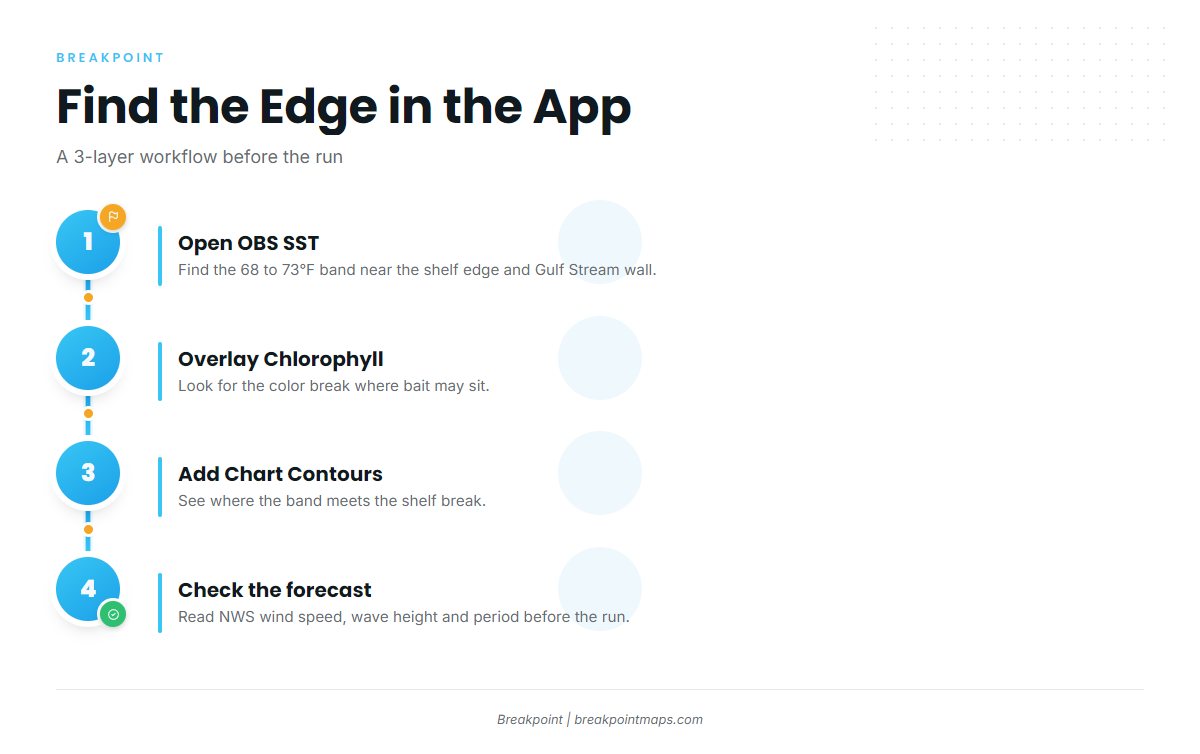
Here is how we would work it the night before:
- Open OBS SST and find the 68 to 73°F band near the shelf edge and the Gulf Stream wall.
- Overlay Chlorophyll to see where the color breaks.
- Use Chart Contours to see where the temperature band meets the shelf break.
Chart layers are not for navigation. Before the run, check wind speed, wave height and period in the NWS marine forecast.
How anglers fish for them here
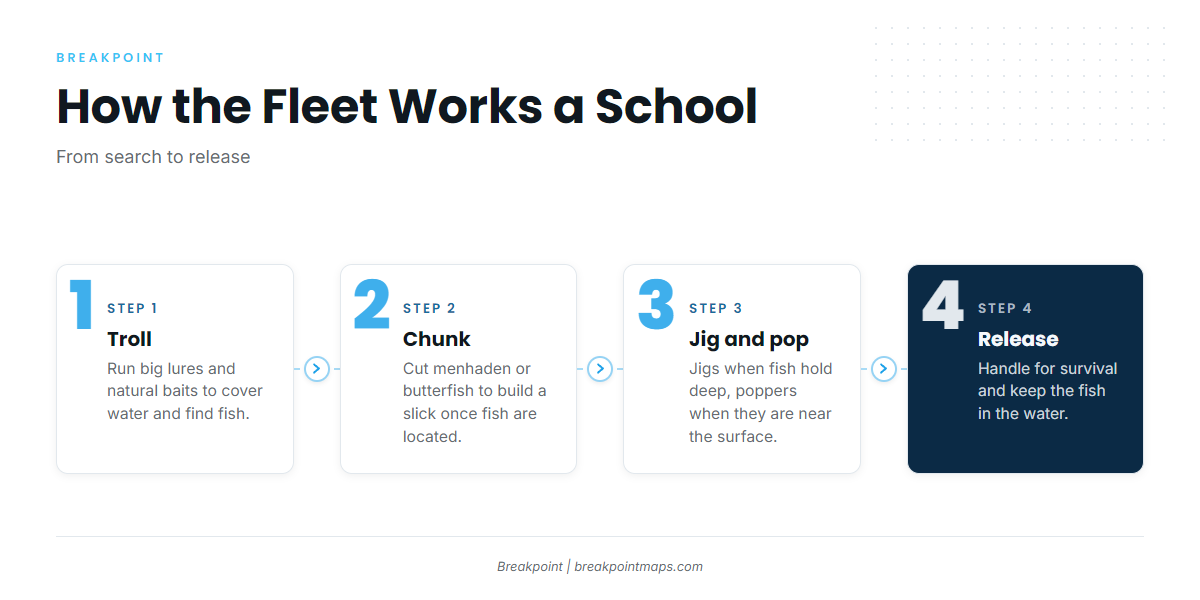
Most boats troll to find fish, then switch to bait or jigs once they are on a school. The usual sequence looks like this:
- Troll to locate. Run big lures and natural baits to cover water fast.
- Chunk once located. Cut and whole menhaden or butterfish build a slick that holds fish behind the boat.
- Jig and pop. Drop jigs beneath located fish and retrieve through the school. Use poppers when fish are near the surface.
- Match the depth. Go topwater when fish are high and jigs when they hold deeper, which ties back to the thermocline.
- Use heavy tackle. Heavy rods and reels with a fluorocarbon leader suit bluefin, which can be line-shy.
Not every bluefin is a target. Bluefin school with yellowfin and are caught incidentally while fishing for yellowfin and swordfish, according to NOAA. Off Florida and Georgia, a yellowfin or blackfin trip can hook one. See our other tuna fishing guides for those fisheries.
Released bluefin must be handled to maximize survival and kept in the water, under the federal release handling rule. Build the trip plan in the app before the run: waypoints on the edge, the forecast numbers and a fallback.
Guides to Atlantic bluefin tuna fishing from specific ports: Savannah, Carolina Beach, Hilton Head Island, Hatteras Village, Morehead City, Ocean Isle Beach, Ocracoke and Sneads Ferry.
FAQ
When is the best time for bluefin off North Carolina?
Tagged fish off Morehead City aggregate from mid-October to mid-May. Large fish leave day-trip range in late spring and return in late fall. Use OBS SST to find the 68 to 73°F band, since fish follow the water more than the calendar.
Can I keep a bluefin tuna?
Possibly, with an HMS permit and a fish 27 inches curved fork length or longer. Limits and Southern area trophy status change in season. NOAA lists them on its recreational bluefin status page, so check it before you fish.
Does a charter’s permit cover me?
A charter or headboat fishing for bluefin operates under the vessel’s HMS Charter/Headboat permit. Confirm license specifics with NOAA HMS and your state agency before the trip.
I caught a bluefin off Florida or Georgia while fishing for other tuna. What now?
Federal rules apply, and the permit is required. If you release it, keep it in the water. If you retain it or it dies, report within 24 hours. Gulf retention is limited to incidentally caught trophy fish.
How do I report a bluefin?
Report it within 24 hours. Call 888-872-8862 or use hmspermits.noaa.gov. This applies to retained and dead-discarded fish.
How do I tell a bluefin from a yellowfin?
They school together, so check before you keep a fish. The Atlantic bluefin tuna species guide covers identification in detail.
What are the closest ports?
Oregon Inlet and Hatteras serve the Outer Banks. Morehead City and Cape Lookout serve the area to the south. South of Cape Lookout, fish are often inshore of the Gulf Stream.